
Micro ring, 6D or feather? A no-nonsense guide to hair extensions
Extensions are not one-size-fits-all. The right method depends on your hair's density, how much change you want and how much upkeep you are happy with.
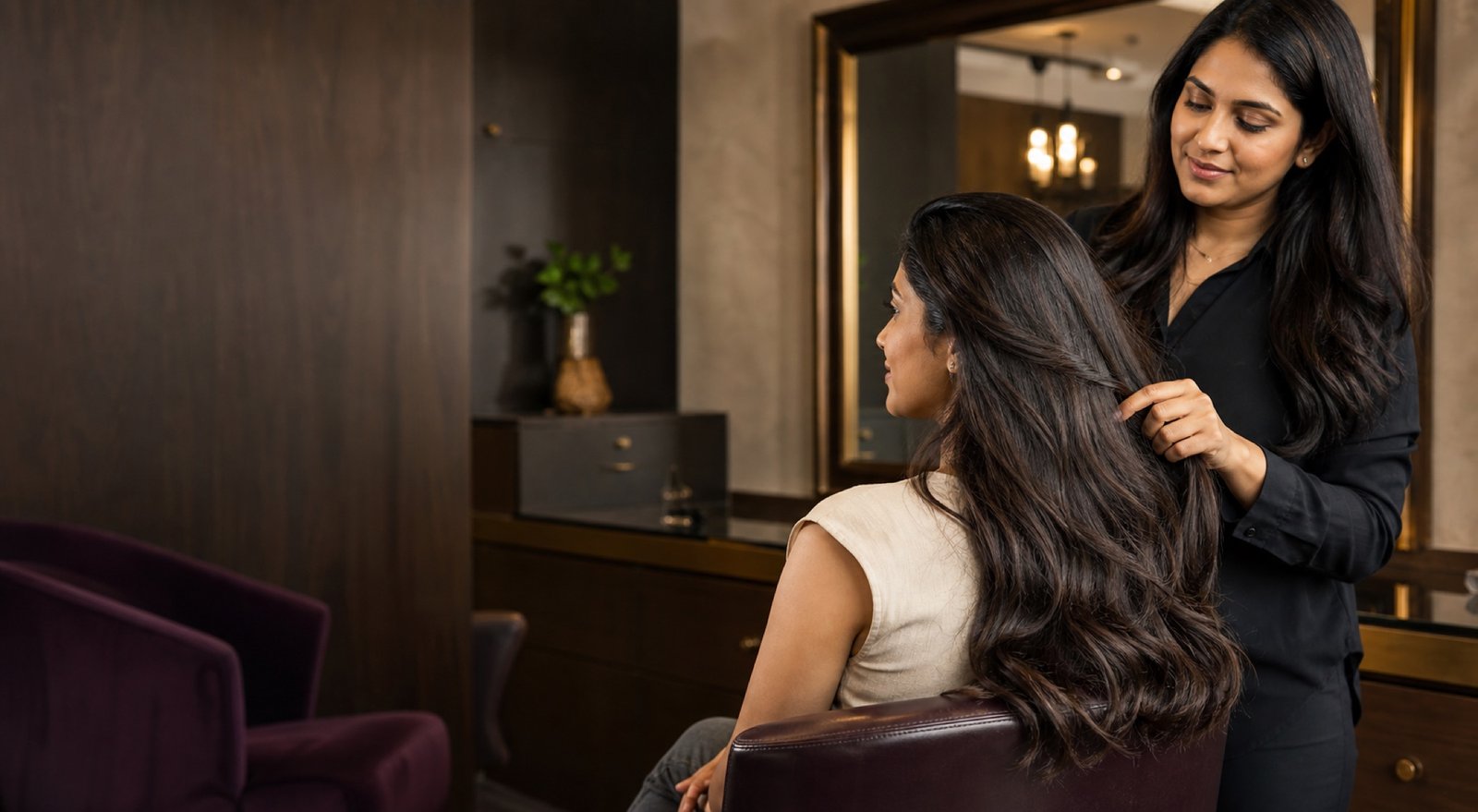
Most people who ask about hair extensions have already seen a dramatic before-and-after online. What they have not seen is that three different methods were probably used across those photos, each suited to a different kind of hair. Choosing the wrong one is the fastest route to extensions that feel heavy, slip or show.
Micro ring: length with no heat and no glue
Micro ring extensions clamp small sections of extension hair to your own strands using tiny metal rings, closed with a cold tool. Nothing hot, nothing sticky and no chemicals near your scalp, which makes it one of the gentlest ways to add real length.
Each ring is placed individually and can be repositioned as your hair grows, so a set can be maintained and reused for several months. It suits fine to medium hair that wants length without heat or adhesive. Allow around two to three hours.
6D and 3D: maximum volume in one visit
Both are keratin-fusion methods: a keratin tip is heat-sealed to a section of your natural hair for a strong hold and natural fall. 6D takes it further by bonding multiple fine strands to one link, so you get more density per attachment point.
This is the method we reach for when someone wants a dramatic change in a single sitting, both length and volume. It takes longer, around three to five hours, and higher-density sets need their maintenance appointments on time so the weight stays evenly spread as your hair grows.
Feather extensions: fullness exactly where you need it
Feather extensions are applied strand by strand, each one keratin-tipped and fused to a fine section of your own hair. Because each piece is so fine, we can add density only where you want it: the crown, the temples or the front, instead of across your whole head.
That makes it the natural choice for fine hair that needs targeted, undetectable fullness rather than a big transformation.
Questions to ask yourself before booking
- Do I want more length, more volume, or both?
- Is my hair fine, medium or thick? Fine hair usually points toward the lighter methods
- Am I comfortable with heat-fused keratin, or do I prefer a heat-free method?
- How often can I realistically return for maintenance?
Looking after your extensions
Whatever the method, the habits are the same. Brush from the ends upward so you never pull at a ring or bond, use a sulphate-free wash routine, keep heavy oils away from the fusion points, and book your move-up on schedule instead of waiting until something feels loose.
The best extension is the one your hair can comfortably carry. A consultation with a proper look at your density is worth more than any photo comparison.
Want to see which method suits your hair?
Book a consultation and we will check your density and lifestyle before recommending a method.
More from the Journal.
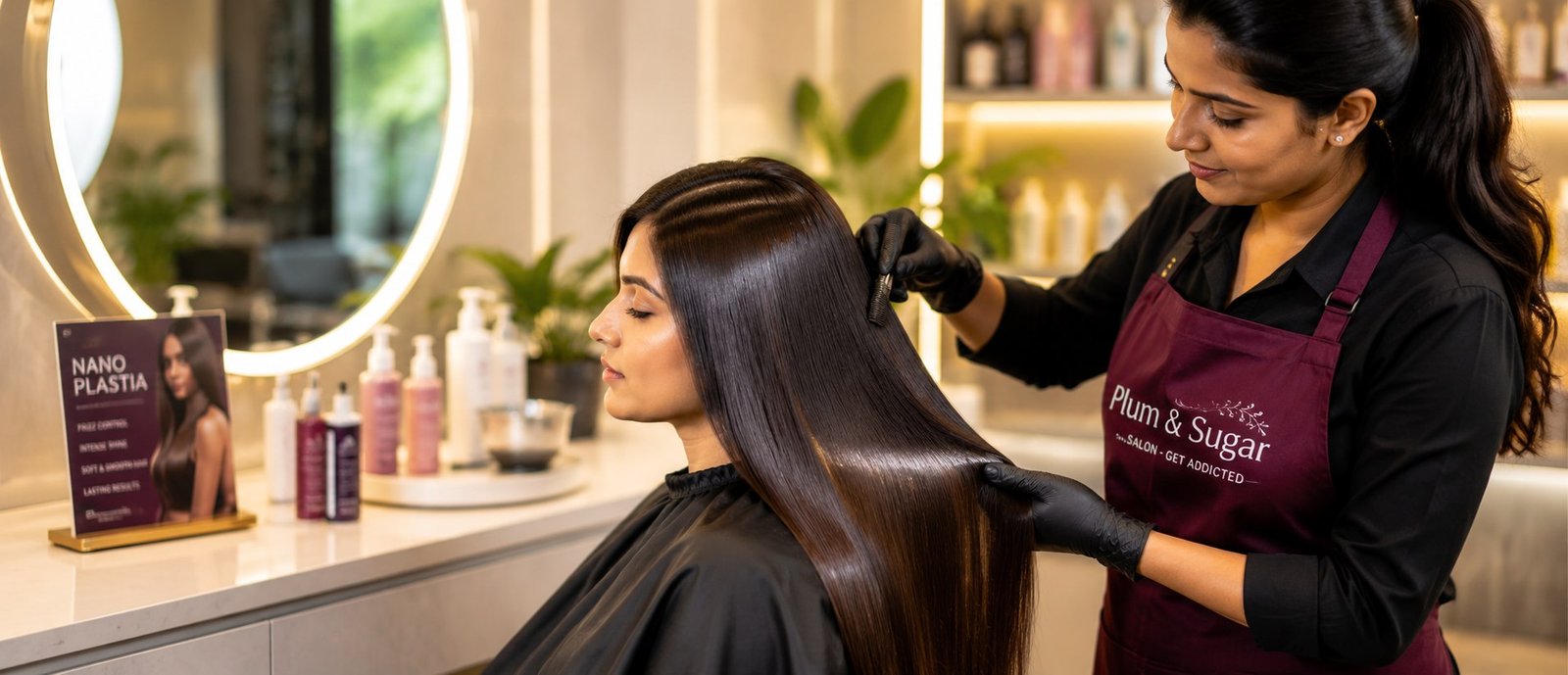
Still fighting frizz at lunchtime? Read this first.
Nano Plastia works inside the strand, not on top of it — which is exactly why it survives Bengaluru's humidity for months instead of hours.
Read the article →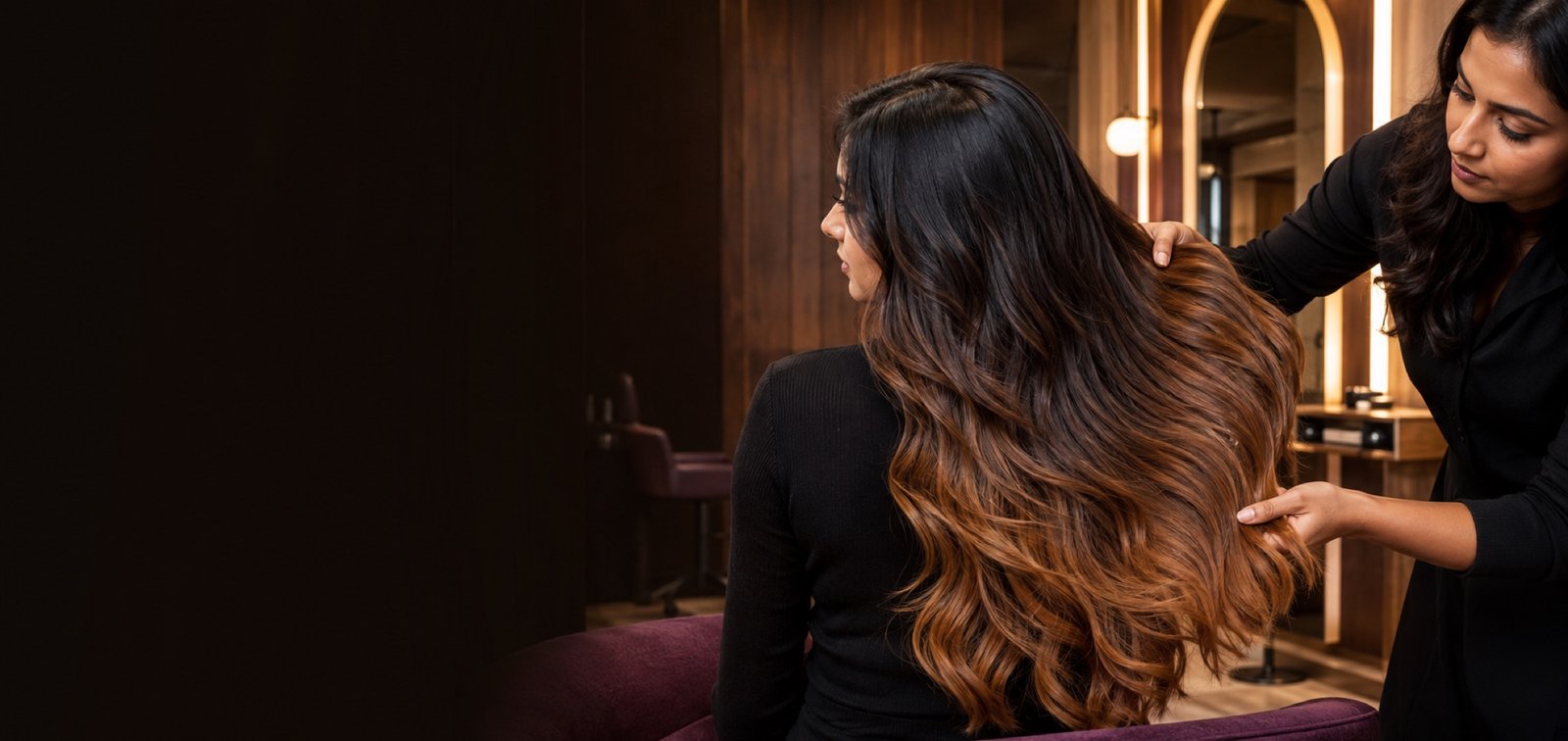
Highlights, ombre or balayage? Choosing colour that suits Indian hair
Three ways to lighten and add dimension, and three very different grow-out stories. Pick by how often you want to visit, not just how it looks on day one.
Read the article →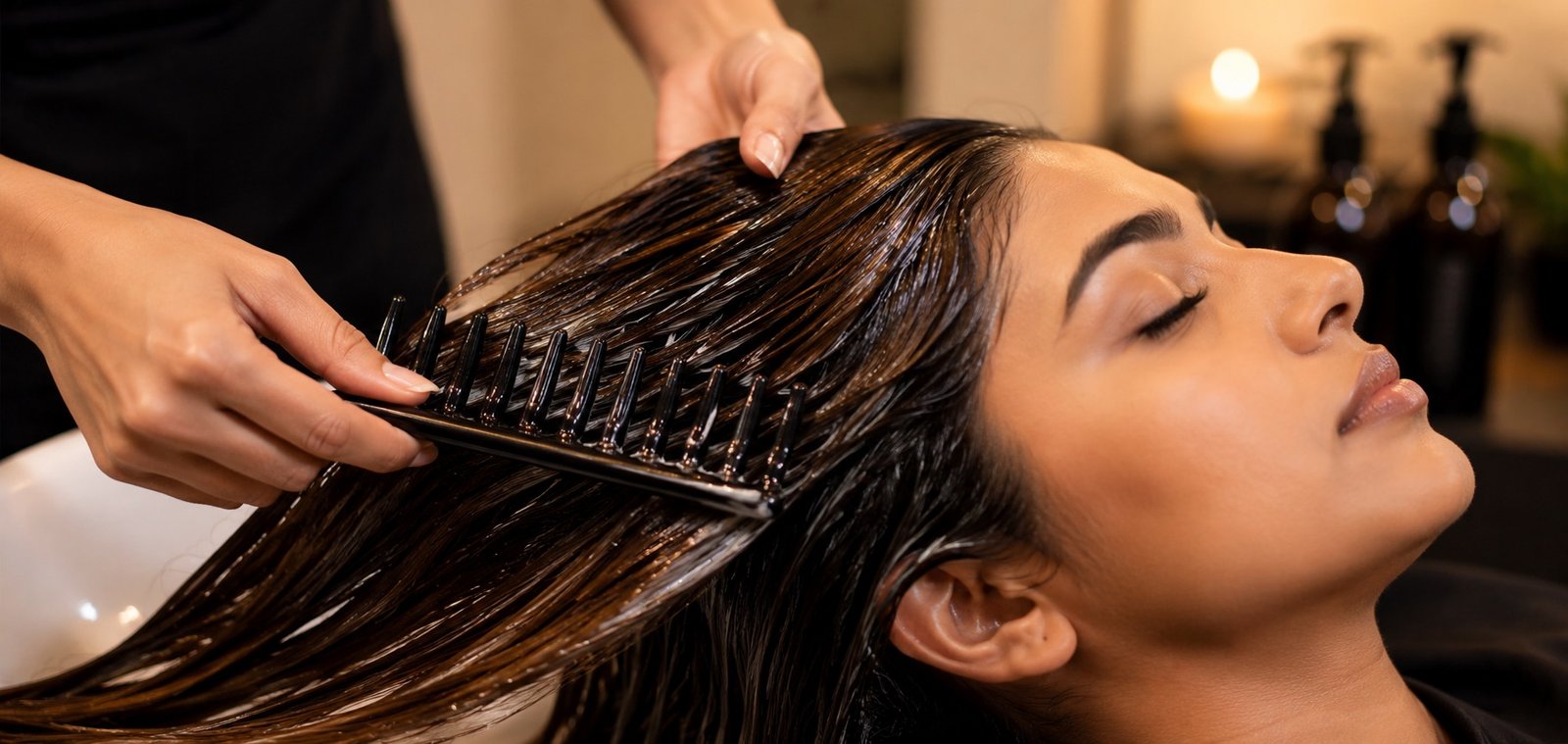
Smoothening, Nano Plastia or Hair Botox? How to pick the right one for your hair
Three treatments, three very different jobs. Here's how to tell whether your hair needs straightening, smoothing or simply repair.
Read the article →